More than a century after its publication, Kahlil Gibran’s The Prophet continues to thrive in bookstores, libraries, weddings, funerals, university dormitories, and private collections, a feat few literary works can match. It is quoted by lovers, politicians, artists, and spiritual seekers, often by readers who may not have delved deeply into its pages. Few books have become so interwoven into everyday cultural life while remaining difficult to categorize.
This ambiguity contributes to its appeal. The Prophet is neither a novel nor a conventional collection of poems. Instead, it is structured as a series of meditations delivered by Almustafa, an exiled prophet preparing to leave the fictional city of Orphalese. Before his ship arrives, the townspeople ask him to speak on topics that define human existence: love, marriage, children, work, freedom, joy, sorrow, friendship, beauty, religion, and death. Each response is brief, lyrical, and intentionally open-ended, encouraging readers to find personal meaning. Gibran does not present a systematic philosophy or theological doctrine; rather, he writes in rhythms that echo scripture without adhering to any specific faith.
This stylistic choice has garnered both praise and criticism. Admirers celebrate the book’s universalism, as it speaks to readers seeking comfort, inspiration, or reflection, while detractors dismiss it as sentimental mysticism. However, the remarkable endurance of The Prophet suggests that literary merit alone does not account for its influence. Gibran understood a fundamental truth about readers: many seek books not just for argument or entertainment but for language that resonates during life’s defining moments. The Prophet serves as a companion to the human experience, one that readers revisit repeatedly rather than consume only once.
The language itself plays a crucial role in this experience. Gibran writes in measured cadences that reflect the style of the King James Bible without resorting to imitation. His prose is highly musical, built on repetition, parallel structures, and metaphor. This deliberate simplicity creates an illusion of effortless wisdom. Yet, beneath this apparent accessibility lies significant craftsmanship, inspiring respect for Gibran’s artistic skill. Each sentence is polished to be memorable when spoken aloud. Few twentieth-century authors have crafted prose that so readily lends itself to quotation.
This quality partly explains why “The Prophet” has attained an unusual cultural status. Individual passages are often quoted independently of the book, appearing in speeches, greeting cards, memorial services, and social media posts. Many people recognize his famous reflections on love or children without realizing their source. In an age increasingly defined by fragmented reading habits, Gibran anticipated literature designed to endure in excerpts while still rewarding complete readings.
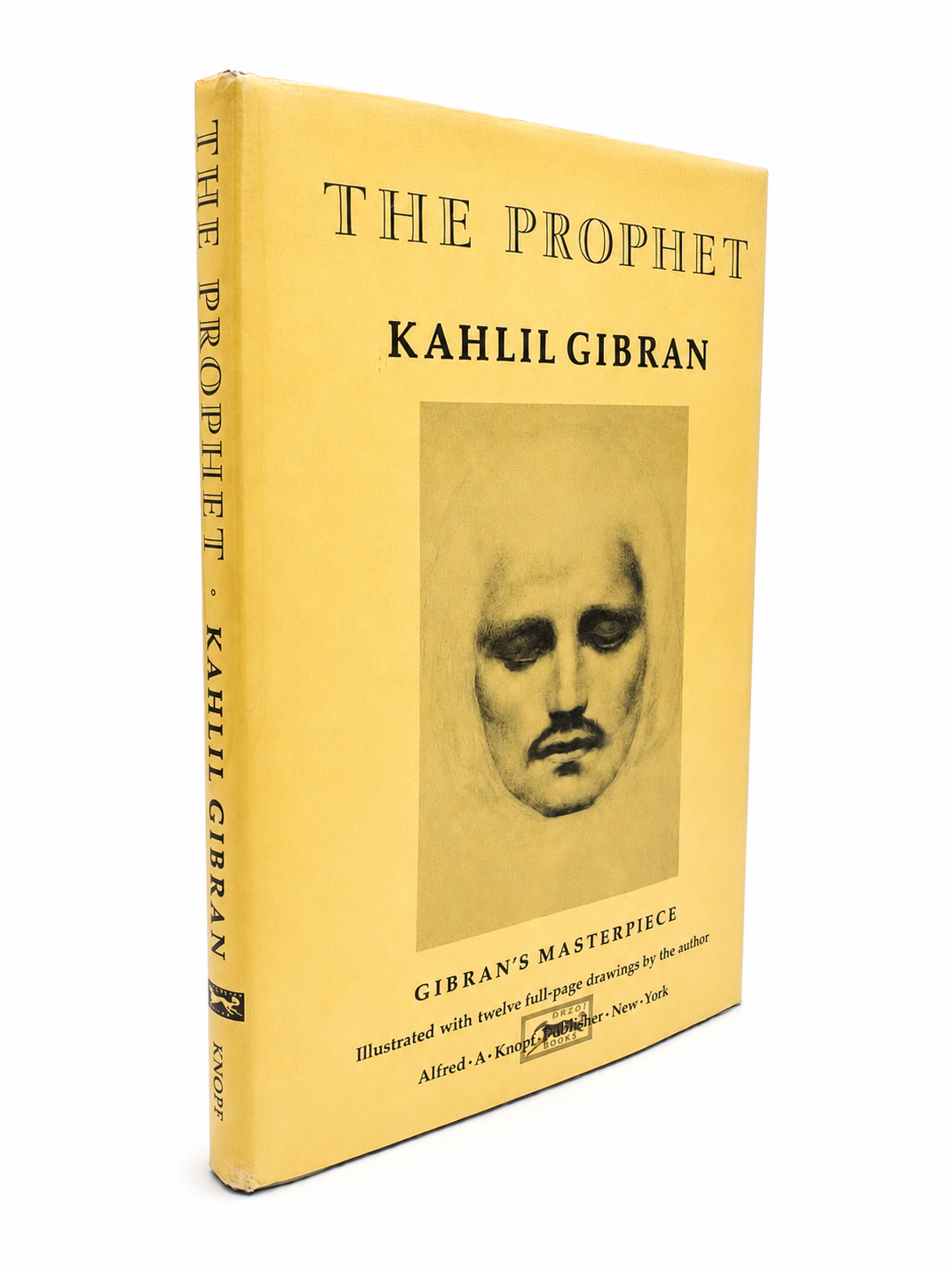
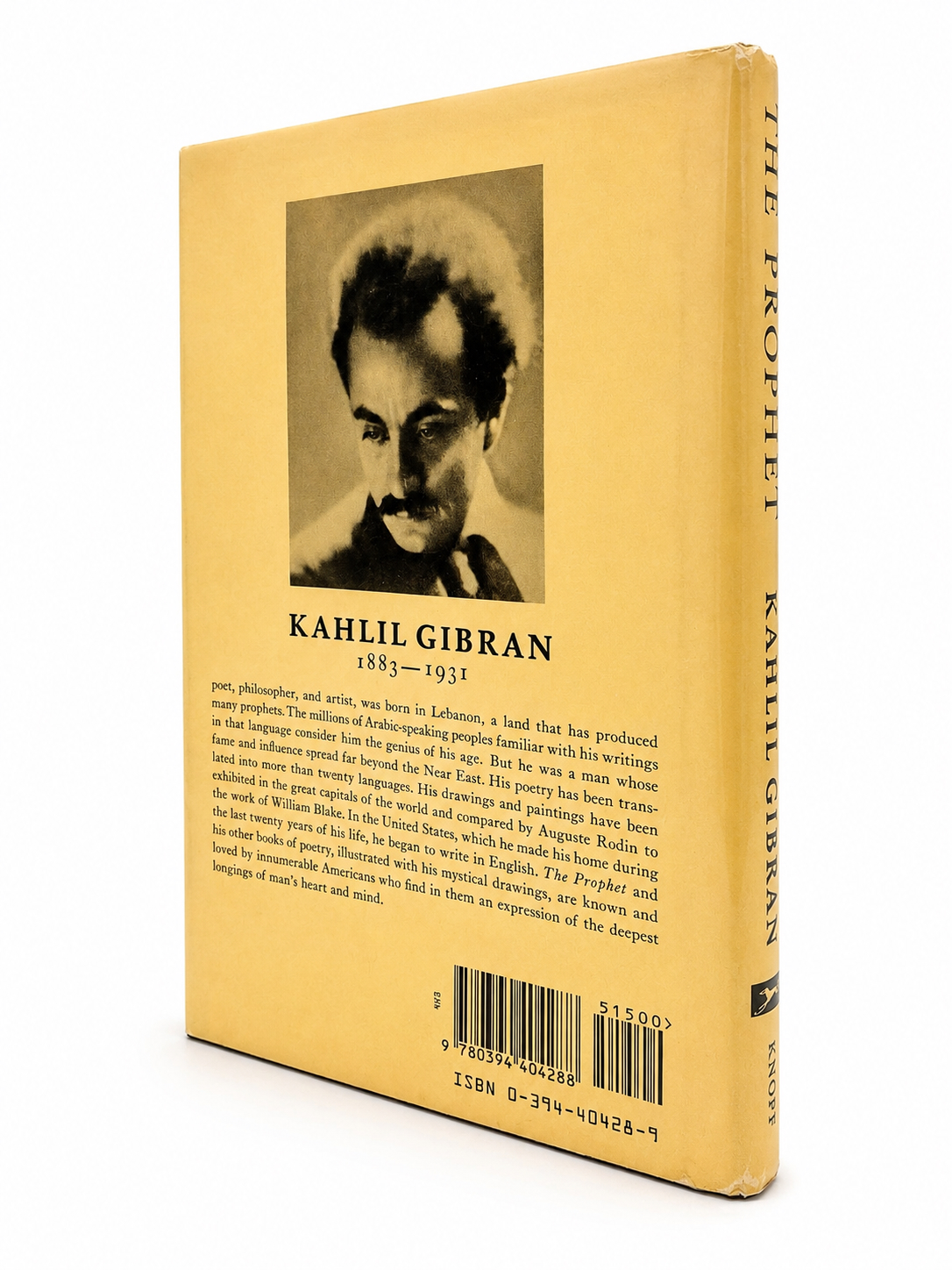
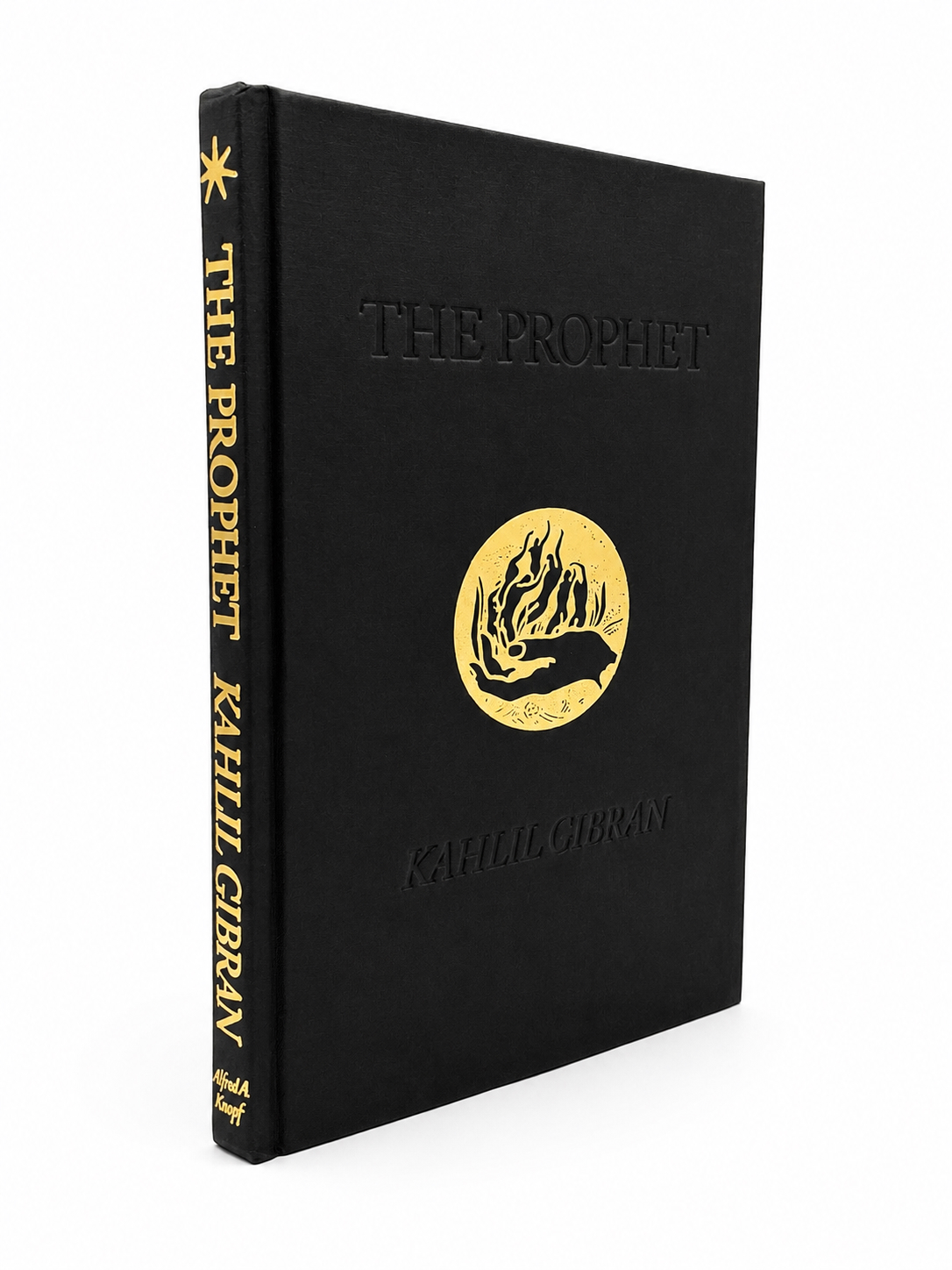
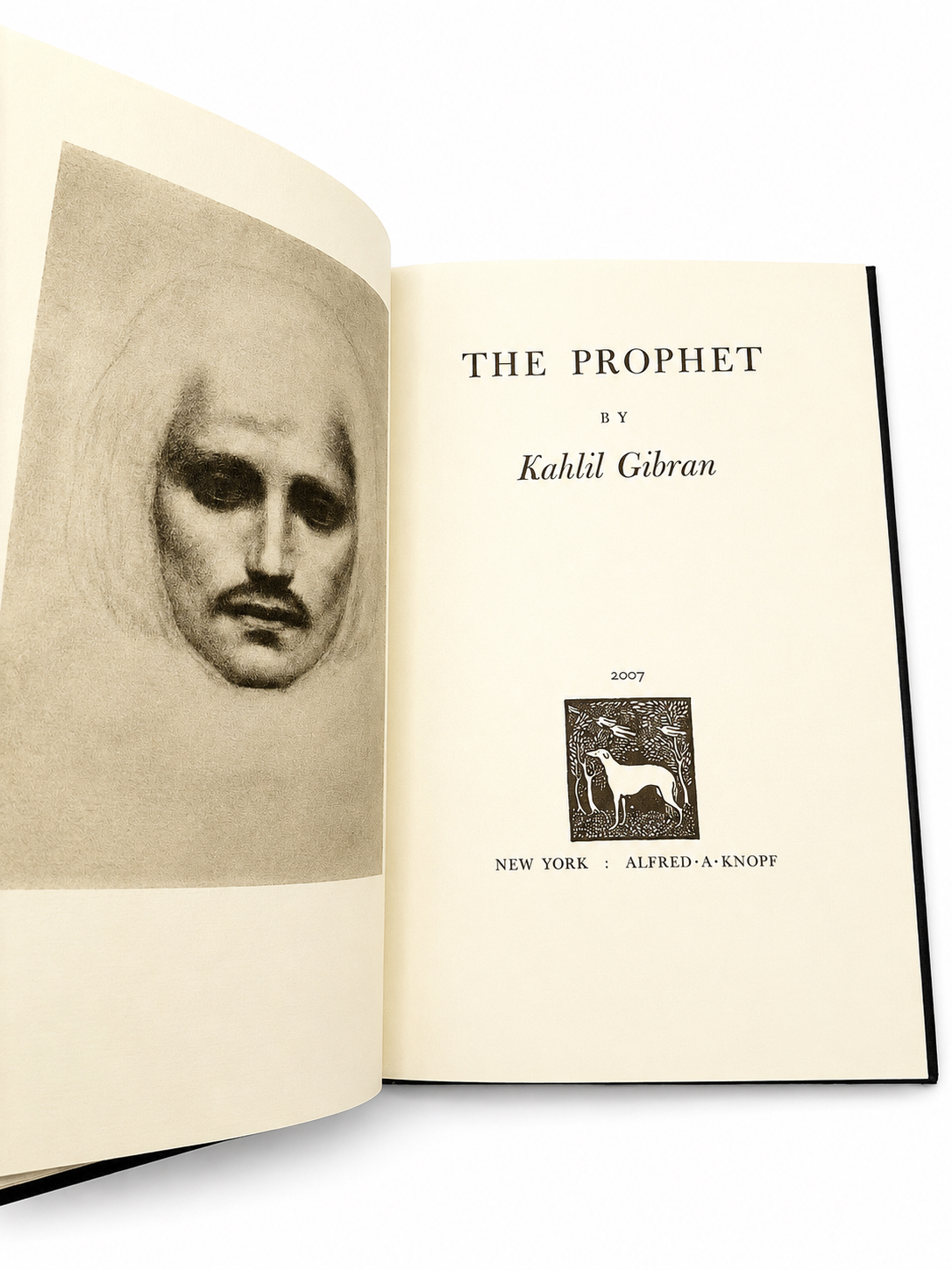
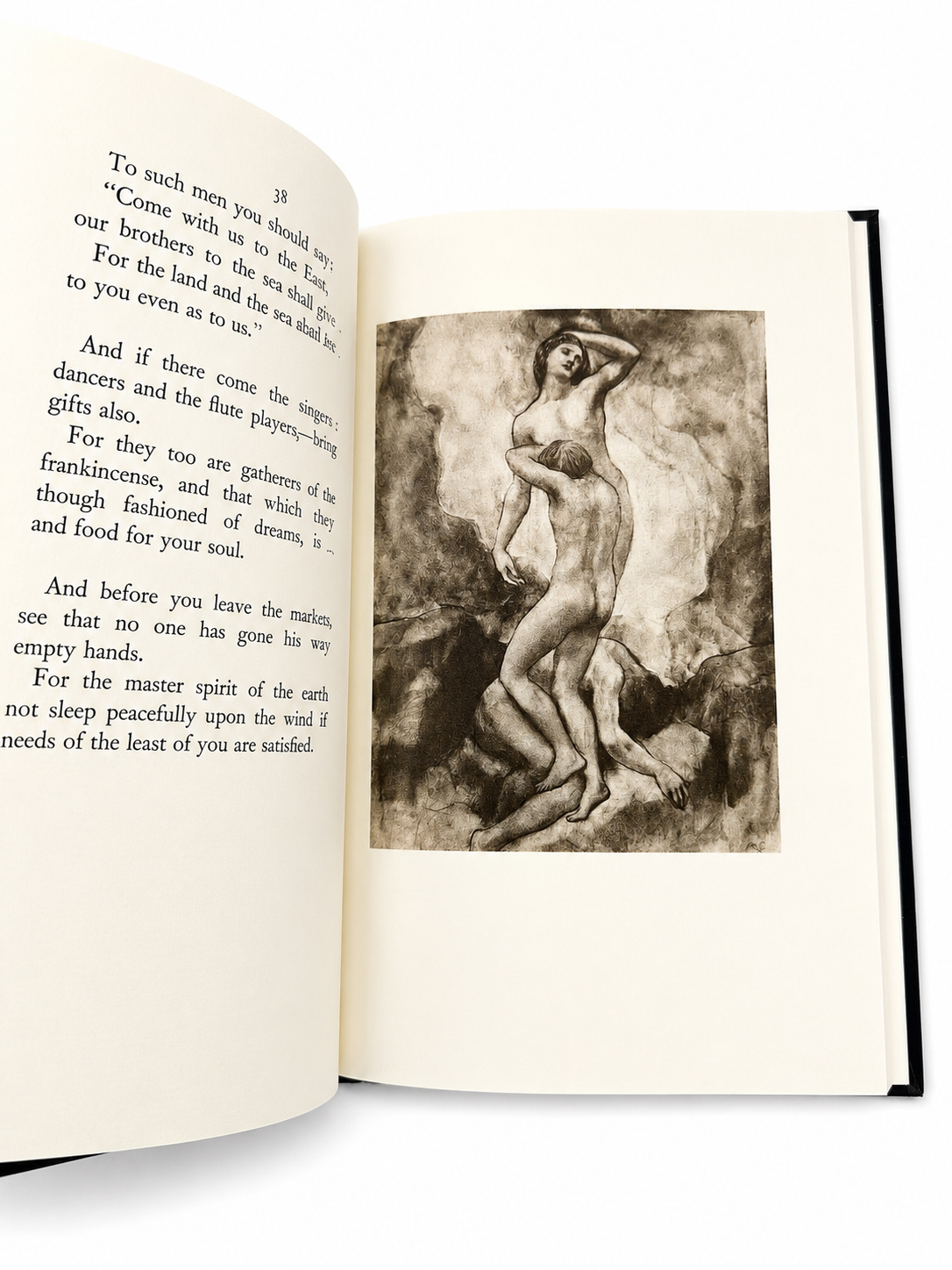
The Alfred A. Knopf edition maintains this tradition with notable elegance. The volume’s understated typography, quality binding, and inclusion of Gibran’s own charcoal illustrations reinforce the intimate relationship between his visual and literary imagination. The drawings are not merely decorative; they extend the text itself, inviting readers to interpret the symbolic faces and figures. Their dreamlike faces and symbolic figures reflect the prose’s emotional atmosphere, showcasing an artist whose talents span multiple disciplines and enriching the reader’s experience and understanding of the work’s spiritual depth.
Reading it today reveals aspects that feel distinctly modern. Gibran resists rigid institutional authority while emphasizing personal responsibility. He celebrates individual freedom without neglecting communal obligation. His reflections on work reject materialism while insisting on dignity in labour. Even his treatment of grief avoids simplistic consolation, suggesting that sorrow and joy are inseparable dimensions of the human experience. These ideas continue to resonate in an era marked by uncertainty, social fragmentation, and a renewed interest in spiritual literature outside of traditional religious structures, making the work feel relevant and vital for contemporary readers.
However, the book is not without criticism. Readers expecting narrative development, psychological complexity, or philosophical rigour may find its aphoristic style frustrating. The lack of conflict and ambiguity can occasionally reduce emotional complexity into idealism. Some passages may become so elevated that they drift toward abstraction. Yet, judging the book solely by the standards of fiction or academic philosophy misinterprets its goals. Gibran intended to write a book of reflection, one that invites contemplation rather than debate.
Perhaps this explains its extraordinary longevity. Great literature often survives because it captures enduring truths about human nature while allowing successive generations to derive their own meanings from it. The Prophet accomplishes this feat. It does not belong to any single religion, nation, or political tradition. While Gibran drew deeply from his Lebanese heritage, Christian upbringing, Islamic culture, and Western literary influences, the resulting work transcends those boundaries without erasing them. It speaks in a voice that feels universal and timeless.








Reviews
There are no reviews yet.